

- Wakefulness
- Daytime sleepiness
- Cataplexy
- Overall symptom severity and change


CLINICAL STUDY DESIGN
ORZEYFUL was studied in 2 different 12-week clinical studies that included a total of 273 people with NT1. In both studies, ORZEYFUL was taken twice daily and compared with placebo (sugar pill). The main goal of these studies was to evaluate wakefulness, along with the other main symptoms of NT1.
Study 1: 168 people took ORZEYFUL (1 mg or 2 mg) or placebo for 12 weeks
Study 2: 105 people took ORZEYFUL (2 mg) or placebo for 12 weeks

ORZEYFUL was proven to help people with NT1 stay awake for longer during the day
How was wakefulness measured?
- The Maintenance of Wakefulness Test (MWT) measures how well people with NT1 can stay awake during the day in a dark, quiet room
- People in the study were tested in 4 sessions that each lasted 40 minutes, and wakefulness was measured as the average number of minutes people stayed awake across the 4 sessions
- More minutes spent awake indicate improvement on this test
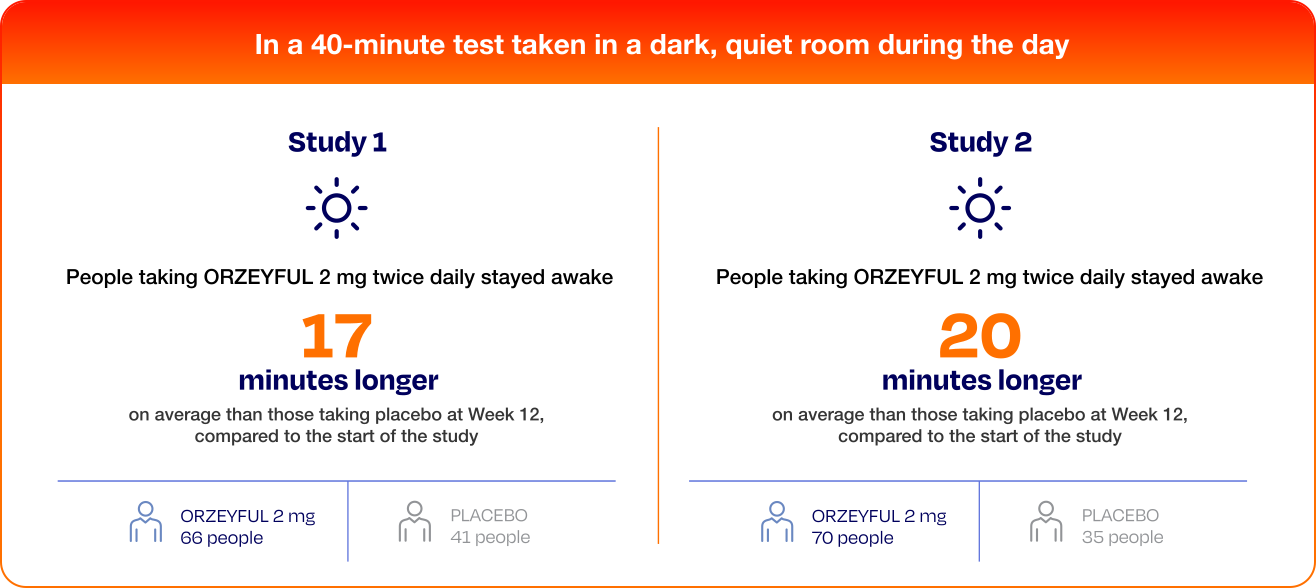
In Study 1, people taking ORZEYFUL 1 mg twice daily stayed awake 14 minutes longer on average than those taking placebo at Week 12, compared to the start of the study.
61 people were taking ORZEYFUL 1 mg and 41 people were taking placebo in Study 1.
Individual results may vary.
Additional wakefulness information
After the clinical studies were completed, the data collected at week 12 from the 40-minute tests were compared to a range commonly used by healthcare providers, called “normative range.” Based on published medical research, normative range is defined as a person staying awake for 20 to 40 minutes in a dark, quiet room. This reflects how long most healthy people can stay awake.
The normative range is meant to give general context. Conclusions cannot be made about how the wakefulness results in patients treated with ORZEYFUL compare to the normative range observed in healthy people.
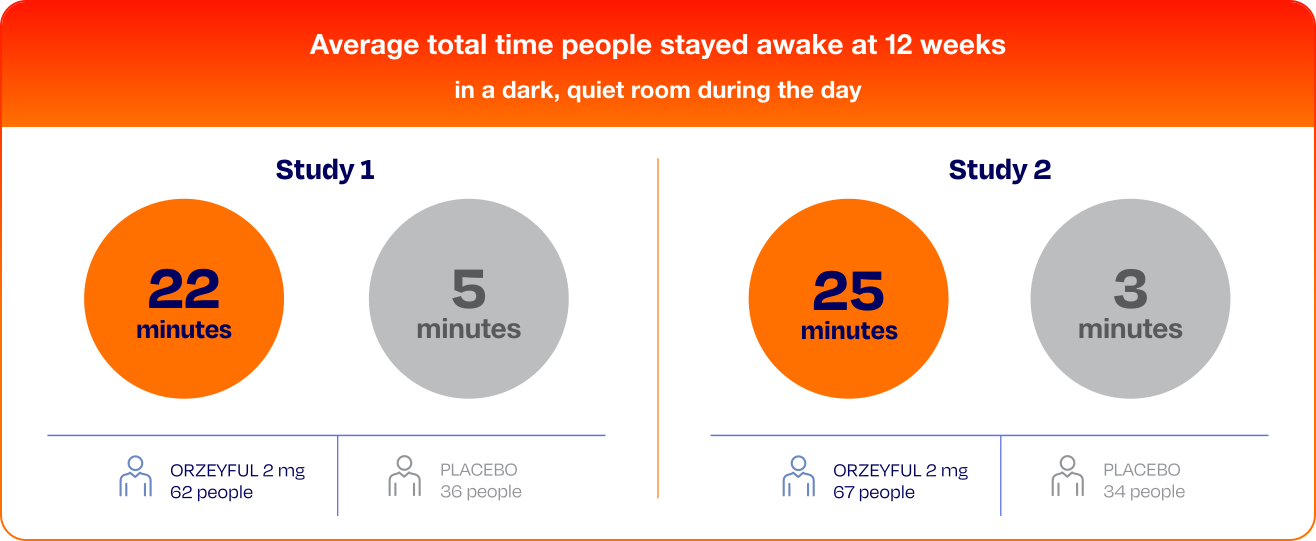
In Study 1, the average total time people stayed awake during the day at 12 weeks was 19 minutes with ORZEYFUL 1 mg twice daily and 5 minutes with placebo.
56 people were taking ORZEYFUL 1 mg and 36 people were taking placebo in Study 1.
CLINICAL STUDY DESIGN
ORZEYFUL was studied in 2 different 12-week clinical studies that included a total of 273 people with NT1. In both studies, ORZEYFUL was taken twice daily and compared with placebo (sugar pill). The main goal of these studies was to evaluate wakefulness, along with the other main symptoms of NT1.
Study 1: 168 people took ORZEYFUL (1 mg or 2 mg) or placebo for 12 weeks
Study 2: 105 people took ORZEYFUL (2 mg) or placebo for 12 weeks
People taking ORZEYFUL felt significantly less sleepy during their daytime activities
How was daytime sleepiness measured?
- The Epworth Sleepiness Scale (ESS) is a questionnaire that a person completes to assess how likely they are to doze off or fall asleep during everyday situations like reading, watching TV, or sitting in a meeting
- ESS scores can range from 0 to 24. A lower ESS score means less daytime sleepiness
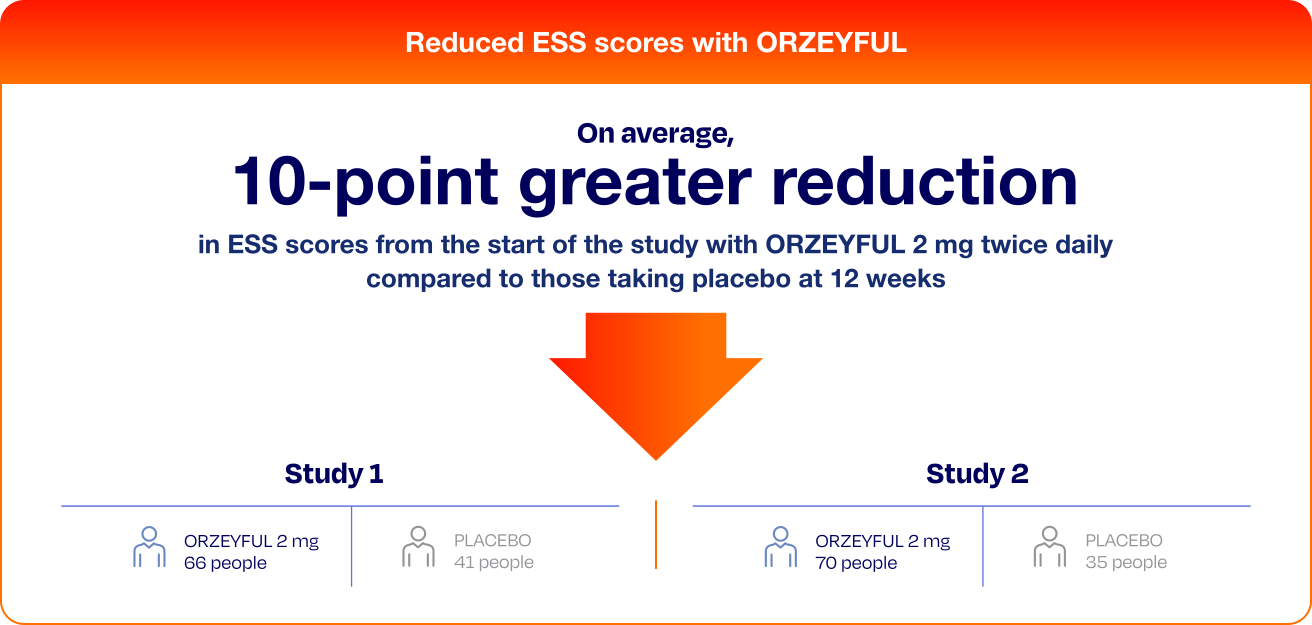
In Study 1, people taking ORZEYFUL 1 mg twice daily had on average an 8-point greater reduction in their ESS score from the start of the study compared to those taking placebo at 12 weeks.
61 people were taking ORZEYFUL 1 mg and 41 people were taking placebo in Study 1.
Individual results may vary.
Additional daytime sleepiness information
After the clinical studies were completed, the data collected at week 12 from the ESS questionnaire were compared to a range commonly used by healthcare providers, called “normative range.” Based on published medical research, normative range for the ESS is considered to be a score between 0 and 10, reflecting normal levels of daytime sleepiness.
The normative range is meant to give general context. Conclusions cannot be made about how the daytime sleepiness results in patients treated with ORZEYFUL compare to normal levels of daytime sleepiness.
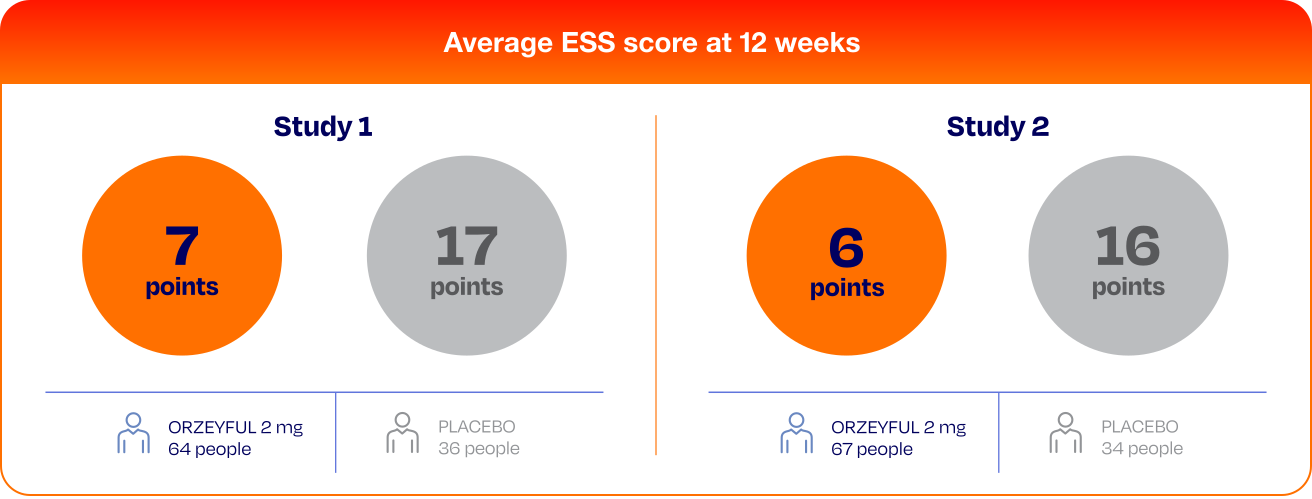
In Study 1, the average ESS score at 12 weeks was 8 points in people taking ORZEYFUL 1 mg twice daily and 17 points in people taking placebo.
57 people were taking ORZEYFUL 1 mg and 36 people were taking placebo in Study 1.
CLINICAL STUDY DESIGN
ORZEYFUL was studied in 2 different 12-week clinical studies that included a total of 273 people with NT1. In both studies, ORZEYFUL was taken twice daily and compared with placebo (sugar pill). The main goal of these studies was to evaluate wakefulness, along with the other main symptoms of NT1.
Study 1: 168 people took ORZEYFUL (1 mg or 2 mg) or placebo for 12 weeks
Study 2: 105 people took ORZEYFUL (2 mg) or placebo for 12 weeks
People taking ORZEYFUL experienced significantly fewer cataplexy events
How was cataplexy measured?
- The Weekly Cataplexy Rate (WCR) is the average number of cataplexy events a person has in 1 week
- People wrote down their cataplexy events in a daily diary, and those notes were used to calculate the weekly average over each 14-day period of the study
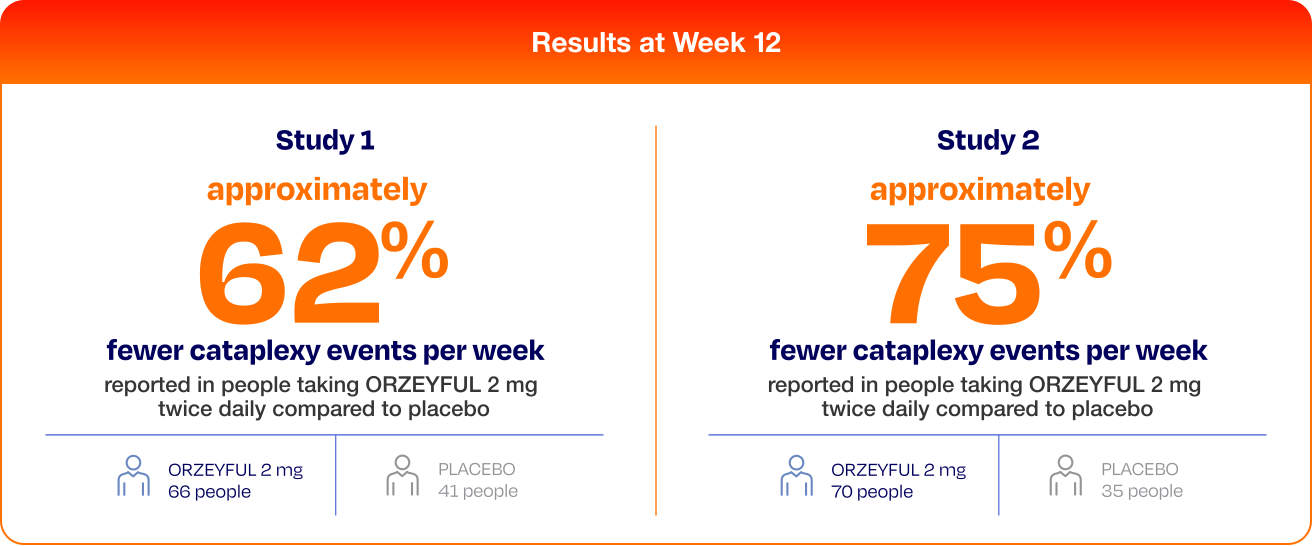
In Study 1, approximately 66% fewer cataplexy events per week were reported in people taking ORZEYFUL 1 mg twice daily compared to those taking placebo.
61 people were taking ORZEYFUL 1 mg and 41 people were taking placebo in Study 1.
Individual results may vary.
CLINICAL STUDY DESIGN
ORZEYFUL was studied in 2 different 12-week clinical studies that included a total of 273 people with NT1. In both studies, ORZEYFUL was taken twice daily and compared with placebo (sugar pill). The main goal of these studies was to evaluate wakefulness, along with the other main symptoms of NT1.
Study 1: 168 people took ORZEYFUL (1 mg or 2 mg) or placebo for 12 weeks
Study 2: 105 people took ORZEYFUL (2 mg) or placebo for 12 weeks




Get information on ORZEYFUL sent directly to your inbox
If you’re considering talking to your healthcare provider about ORZEYFUL, or just want to learn more, sign up below.
Actor portrayal.
Recommended For You
Follow us on social


